E-commerce SEO for online shopsMore orders –less dependence on ads.
E-commerce SEO is the optimisation of an online shop so that its category and product pages rank on Google and appear in AI search for queries with buying intent. I use a repeatable system: first the pages that are already close to page 1, then keyword structure, category pages and technical SEO. Step by step, your shop becomes less dependent on paid ads and marketplaces.
Why do so many online shops get traffic but too few orders?
It’s rarely a lack of visitors. Usually it’s structure: several pages compete for the same terms, category pages are empty, and the shop ranks for broad searches instead of searches from people ready to buy.
Plenty of shops have traffic but not enough orders. Or they rely almost entirely on Google Ads and marketplaces, so every sale costs a click or a commission. The causes are nearly always the same:
- Keyword chaos: nobody has decided which page should rank for which term.
- Cannibalisation: a category, a filter page and a blog post fight over the same term – and none of them wins.
- Empty category pages: a product grid with no introduction, no guidance and no answer to the searcher’s question.
- Manufacturer descriptions: the same product copy appears in dozens of other shops, so Google has no reason to show yours.
- Technical friction: thousands of filter URLs, out-of-stock products with no plan, slow pages.
The good news: all of these can be fixed. And a shop that has fixed them sells around the clock without paying for every visitor.
How does my e-commerce SEO system work?
Four steps, always in the same order: find quick wins, align keywords, turn categories into landing pages, secure the technical base and authority. The system is repeatable and measurable – no black box.
| Step | What happens | Result |
|---|---|---|
| 1. Quick wins | find pages in positions 11 to 15 and improve them | extra orders, visible early |
| 2. Keyword alignment | set a goal, choose long-tail terms, map one page per term | clear structure, no cannibalisation |
| 3. Categories as landing pages | introduction, buying guide, FAQ, terms | pages that rank and sell |
| 4. Technical SEO and authority | crawling, internal links, backlinks | rankings that survive the next Google update |
Step 1: Find pages that are almost on page 1
Quick wins are pages already sitting in positions 11 to 15 – just behind page 1, where hardly anyone clicks. Targeted work on titles, content and internal links moves exactly these pages up. That’s the fastest route to extra revenue, because Google already trusts them.
Step 2: Align your keywords
I don’t just collect keywords. I look for the gaps where your customers are already searching with their wallet out – realistic long-tail terms instead of fiercely contested head terms. Long-tail keywords are longer, more specific queries such as “office chair with headrest for tall people” rather than “office chair”: less volume, far more buying intent.
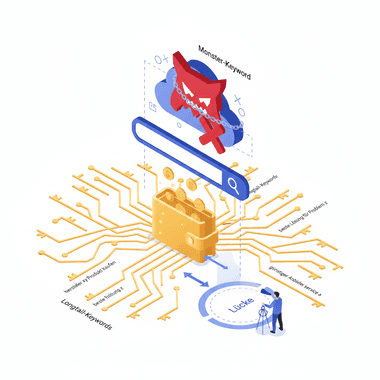
- Set a goal: for example, 30 extra sales a month within 6 months. A measurable goal decides which terms matter.
- Long-tail focus: specific queries that convert into orders more often.
- Keyword mapping: each term gets exactly one target page. That ends cannibalisation.
Step 3: Turn categories into landing pages
Category pages are the most important SEO pages in a shop, because they rank for the terms that drive the most revenue. I build them out into real landing pages, starting with the biggest levers: home page, top categories and top products.
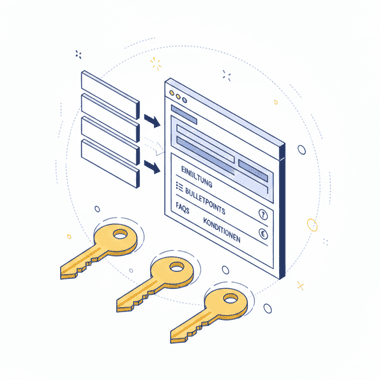
- Original content: no recycled copy, but genuine help with choosing.
- On-page polish: page titles and meta descriptions with a clear benefit. My guide to meta description examples shows what works.
- Clean structure: readable URLs such as
/office-chairs-wholesale/instead of/category?id=4711.
Step 4: Technical SEO, authority and safety
No risky experiments – I build rankings that survive the next Google update.
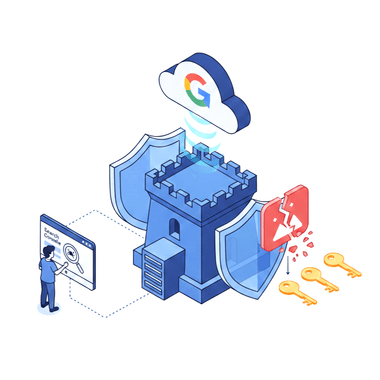
- Crawl check: in Google Search Console I make sure Google can reach every important page, and none of the irrelevant ones.
- Internal links: strong guide articles link to the categories that should rank, with fitting anchor text.
- Authority: links from partners, manufacturers and genuinely link-worthy content instead of bought links in bulk.
What makes a good category page?
A good category page answers the searcher’s question and leads them to the right product. These building blocks work in practice:
| Element | Why it matters |
|---|---|
| Short introduction above the products | tells Google and visitors straight away what the page is about |
| Buying guide in bullet points | helps people decide: material, size, use case |
| Terms | shipping, delivery time, returns, volume discounts for wholesale |
| Links to subcategories | guides visitors deeper and spreads link equity |
| FAQ at the bottom | answers typical questions and covers more search terms |
Copy matters, but it doesn’t replace a good product range. Google and your customers reward pages where people quickly find what they’re looking for.
How do you optimise product pages?
Product pages mainly rank for very specific searches: brand, model, size, colour. To be found and to sell, they need:
- Original descriptions instead of manufacturer copy, answering the questions customers actually ask.
- Good images with descriptive alt text and fast loading.
- Structured data for price, availability and reviews, so Google can show these details directly in the results.
- Genuine customer reviews that build trust and add new search terms.
- A plan for out-of-stock items: if the product returns, the page stays live. If it’s gone for good, a 301 redirect sends visitors to the successor or the category.
Which technical errors cost online shops their rankings?
Technical errors hurt more in a shop than on a normal website, because they multiply across thousands of pages. The most common ones:
- Filter and sort URLs: every combination of colour, size and price creates a new address. Left uncontrolled, Google wastes its time on pages nobody searches for.
- Duplicate content: variants, print versions or products in several categories appear under different URLs. A canonical tag tells Google which address is the right one.
- Load time: large images and too many scripts slow the shop down, especially on mobile. My guide to Google PageSpeed Insights shows how to measure and fix it.
- Content loaded only via JavaScript: what appears only in the browser is often not fully visible to Google and AI systems.
- Re-platforming without a redirect plan: switching shop systems without clean 301 redirects can wipe out a large share of your rankings. My guide to a website relaunch explains how to avoid that.
How does your shop get visible in AI search?
More and more people ask ChatGPT, Gemini, Perplexity or Google’s AI Overviews which product to buy. These systems mention shops and products whose details they can read clearly and trust. GEO – optimising for AI search – therefore builds on the same foundations as good e-commerce SEO:
- complete, unambiguous product data (brand, model, dimensions, price, availability),
- category pages with clear buying advice instead of bare product grids,
- genuine reviews and mentions outside your own shop,
- content that sits in the HTML rather than being loaded by JavaScript.
More on my page about GEO and in my guide to optimising for Google AI Overviews.
What does this look like in practice?
Josef Schulte-Ufer KG sells cookware through its own online shop. With SEO, shop revenue tripled. The case study shows how we went about it and which quick wins came first.
Read the Schulte-Ufer case study
“If you want to launch the SEO rocket, Hamed Farhadian is the right person. We started with the SEOrocket package and things took off fast. The first successes became visible in no time and we achieved quick wins.”
From revenue X to 3X
“Top performance from the agency. My team and I started out with revenue X. Thanks to Hamed and his team at SEOeffekt, we were able to increase our traffic 4x and, as a result, grow our revenue 3x in a very short time. I’m looking forward to working together further and to even better visibility. Let’s see how well my team and I will be doing on Google by the end of this year. With SEOeffekt, anything is possible. Brilliant!!”
“We came across Hamed through his Google ranking and thought: if he ranks at the top, he can’t be that bad. We’ve now been working together for four months and feel very well looked after – not only professionally, the personal side fits too, which also matters for the long-term partnership we want. Hamed is always solution-focused, very reliable and shows lasting ambition to make projects succeed in the client’s interest. We’re looking forward to continuing our work together!”
Transparent processes, real results
“We worked with Hamed and his team on SEO and, towards the end, on Google Ads as well. The collaboration was positive throughout. Hamed is very helpful, pleasant to deal with and always keen to achieve the best possible results. What we particularly liked was that the processes were transparent and a lot was explained clearly. That meant we learned a great deal ourselves. […] All in all, a very professional and committed team. Highly recommended.”
Translated from German.
How do you get from traffic chaos to predictable sales?
Combine long-tail terms, a clear structure and clean crawling, and you’ll see results sooner than you might expect. My principles:
- Focus on revenue: I work on the levers that bring orders, not on numbers that look good in a report.
- Quick results first: quick wins before big projects, so you see early on that it pays off.
- From chaos to strategy: a roadmap showing what happens in which order.
Enter your shop’s address in my SEO Compass, and within a few minutes you see where your biggest levers are on Google and in AI search:
Prefer to talk to me directly? In a free intro call we look at your shop and work out which quick wins come first.
More visitors are only half the job. If your shop already has traffic but too few people order, conversion rate optimisation is the next step. If you sell to businesses, have a look at B2B SEO. For a clear plan, start with SEO consulting; ongoing delivery is handled by my team at SEOeffekt as part of our SEO services.

E-commerce SEO questions
Updated on · by Hamed Farhadian
What is e-commerce SEO?
E-commerce SEO is search engine optimisation built for online shops: category and product pages are structured so they rank on Google and get cited in AI search for queries with buying intent. Unlike a company website, you’re dealing with hundreds or thousands of similar pages, filters, variants and out-of-stock products – and the goal is orders, not just visitors.
Which shop platform is best for SEO?
Shopify, WooCommerce and Shopware can all rank well. What matters is the set-up: readable URLs, controlled filter pages, fast loading times and original copy on category pages. If your shop runs on WordPress and WooCommerce, my page on WordPress development in Hamburg goes into more detail.
How quickly does e-commerce SEO increase revenue?
Pages that already sit just behind page 1 respond fastest – they can often be moved up within a few weeks. Building new categories and domain authority takes months. I don’t give ranking guarantees: Google decides.
What is keyword cannibalisation?
Keyword cannibalisation means several pages of your shop compete for the same search term – a category, a filter page and a blog post, for example. Google can’t tell which one to show and often ranks none of them well. The fix is keyword mapping: exactly one target page per term.
Is SEO worth it if I already sell on Amazon?
Yes. Marketplaces bring reach, but they charge fees and own the customer relationship. Every order through your own shop from organic search has no click cost and no commission – and the customer comes straight back to you next time.
How much does e-commerce SEO cost?
It depends on the size of your shop, the platform, the competition and your goals. After a short conversation you get a clear proposal. You can see the building blocks in the overview of my SEO solutions.