Where can you watch the interview?
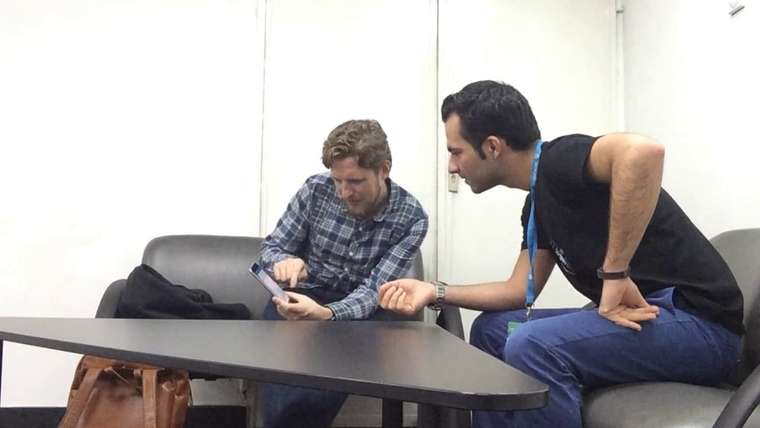
The video is in English and runs about 15 minutes. It only loads once you click play.
What are Matt Mullenweg’s key points in the interview?
We talked about what WordPress offers founders, why it is open source and how Automattic works. Five points stuck with me:
- Test ideas cheaply. With WordPress and a few plugins you can build a working prototype for a few hundred dollars and see whether the idea catches on. Only once it does do you invest more. Matt’s example is Groupon: Andrew Mason’s first experiment ran on WordPress.
- Price says nothing about quality. Paid themes and plugins aren’t automatically better than free ones. Some premium add-ons are excellent, some aren’t – and WordPress itself shows that great things can be free.
- Pay it forward instead of selling. By his own account, selling WordPress never even occurred to him. The software was built on the open-source project b2/cafelog, and he wanted to pass that head start on: with plugins and themes, others build on WordPress rather than starting from scratch.
- Output matters, not presence. At Automattic, what counts isn’t when someone turns up or how busy they look, but what they deliver. Teams coordinate through P2, a WordPress theme for internal posts, instead of email, and each team picks its own tools. The one rule: accept bug reports from anywhere.
- Many attempts rather than one big bet. Open source or not, most projects never find users. So Matt’s advice is to try lots of things, see what sticks and build on that – rather than putting everything into one expensive, drawn-out project.
His goal for WordPress: to power the majority of websites, handle many languages far better and let you do everything on your phone. For slow connections he relies on apps that save changes locally straight away and sync them in the background once you’re back online. That interested me in particular, because I had just come back from Tehran, where many founders work with slow connections.
Who is Matt Mullenweg?
Matt Mullenweg is an American developer and entrepreneur and one of the two founders of WordPress. In 2003 he started the software with Mike Little as a fork of an existing blogging tool. In 2005 he founded Automattic, the company behind WordPress.com, WooCommerce and Jetpack.
WordPress itself is an open-source content management system: free software that lets you build websites and manage content without writing code. Matt Mullenweg still shapes the direction of the project today.
What is a WordCamp?
A WordCamp is a volunteer-run conference for the WordPress community. Developers, agencies, site owners and beginners meet for talks, workshops and conversations.
WordCamp Europe 2014 took place from 27 to 29 September 2014 at the National Palace of Culture (NDK) in Sofia. Matt Mullenweg held a one-hour Q&A session (opens in a new tab) with the community there. It was at this conference that I put my questions to him.
Why did this conversation matter to me?
For many years WordPress was my tool of choice for websites and my own projects – hamed.de itself ran on WordPress until 2026. At WordCamps I met the people behind the software, including Joost de Valk, founder of Yoast SEO, in Sofia. Why I long considered WordPress the first choice for SEO is explained in Is WordPress good for SEO?
How do I see WordPress today?
WordPress remains a very good choice for many businesses, especially when several people publish content regularly. Still, in 2026 I moved my own site to the Astro framework, because above all it needs to be fast and low-maintenance.
If you’re staying with WordPress, these guides will help:
- Fast WordPress hosting: how to spot a good host
- Speed up WordPress: the most common bottlenecks and how to fix them
- WordPress SEO guide: the key settings, step by step
To see where your website stands on Google and in AI search, enter your address in my free SEO Compass (opens in a new tab) – within a few minutes you’ll see where your biggest levers are. For help with your WordPress project, here’s how I work as a WordPress expert in Hamburg; more articles are on the blog.