What is the comfort zone?
Your comfort zone is the part of your life where you feel at ease because there are no real challenges. You know the situations and decisions, and you respond on autopilot.
I see it again and again, in myself and in others: you live in familiar surroundings, with familiar people and familiar routines – and don’t notice how you slowly get rusty and hold yourself back.
In the comfort zone you don’t have to reassess your experience, learn unfamiliar ways of thinking or really engage with anything new. You feel confident and unafraid of other people’s judgement. Now and then a small decision comes up – where shall we eat tonight, what shall we watch? The truly big questions get elegantly skipped.
Why do you need a comfort zone?
The comfort zone isn’t bad. At work, in a relationship, in your own business or in how you treat yourself, you need it to function during quiet phases and to recharge.
It’s built through routine. Do something long enough and you feel at home in it. That’s exactly where the danger lies: far too often, people stay too long.
What happens if you stay in your comfort zone too long?
Stay in your comfort zone too long and you lose the ability to respond quickly and flexibly to unfamiliar situations. Mind and body get used to it.
It shows in how people start avoiding anything unfamiliar. For many, that turns into a real fear of the unknown. They become creatures of habit who always go to the same restaurant because the “risk” of a bad meal is too high. On its own that’s harmless – but it shows how someone weighs risk against reward. You get rusty and close yourself off from the new experiences that make life worth living.
Why is the comfort zone dangerous for entrepreneurs?
In working life it has very concrete downsides, especially for founders and business owners. Stay in your comfort zone too long and you lose your capacity to innovate.
Innovation needs fresh ways of thinking, and that kind of thinking is like a muscle: you have to train it and keep putting it under load by finding new solutions to new problems. That only works if you engage with new things – new markets, new tools, new people. That’s why I test new technology such as AI on my own projects first. You can see what comes out of it in my lab.
Where is my own comfort zone?
For me, the comfort zone has always been my home town, Hamburg. I know the streets, I know my friends, I know how to behave where and what awaits me in the morning. There are hardly any big challenges.
That’s less about the city and more about my own mindset in that environment. Maybe you recognise that in yourself.
I’ve never been one to live comfortably for too long. I love a challenge – whether travelling to faraway places or trying out different business models. I’ve rarely been afraid of the unknown. But I notice too that, over the years, the appetite for the unusual fades. So I simply tried something: I took part in a comfort zone challenge.
What was my comfort zone challenge like?
A comfort zone challenge is a series of small tasks meant to take away your fear of the new. The goal: do something crazy and stop caring what others think. Because the comfort zone often grows out of knowing that nobody will judge you there.
The first task: lie down on the floor somewhere busy and take photos of your own feet.
Sounds mad, and it was. I was out shopping with a friend on Mönckebergstraße, Hamburg’s main shopping street, when it suddenly came to me inside a bank branch. Don’t overthink it, just do it. I lay down on the floor and stayed there for 30 seconds.
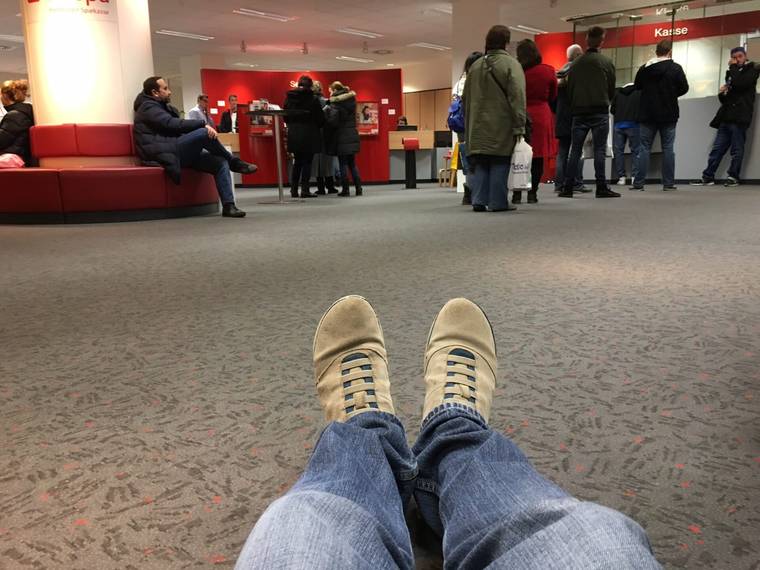
It felt fantastic, for two reasons:
- You learn to overcome the fear inside you. The hardest moment is the one just before.
- You realise hardly anyone cares. Everyone else is busy with themselves.
How can you step out of your comfort zone?
A simple model with three zones helps: in the comfort zone everything is familiar. In the learning zone you’re challenged but not overwhelmed – that’s where you grow. In the panic zone the task is so big that fear blocks learning. Good steps lead into the learning zone, not into panic.
Here’s how to start:
- Start small: one dare a week that takes a moment of courage.
- Break routines: a new restaurant, a different route to work, a book from an unfamiliar field.
- Meet strangers: for example at Startup Walk & Talk, where you talk to someone new every 10 minutes.
- Try something new: a new tool, a side project, a business idea tested on a small scale.
- Don’t overthink it: the longer you deliberate, the more reasons your mind finds against it.
- Look back: write down what happened. It’s usually half as bad as you feared.
Are you ready for your own challenge?
I challenge everyone who has read this far. It may sound crazy, and your brain will give you a thousand reasons why it’s wrong. But face your fear and jump out of your comfort zone. What awaits you are new experiences – and quite possibly an appetite for more.
With that in mind: I wish you an uncomfortable day.
Who I am and what else I do is on my about page. How I’ve experimented with online business models is covered in my article on virtual startups. More articles are on the blog.